
 |
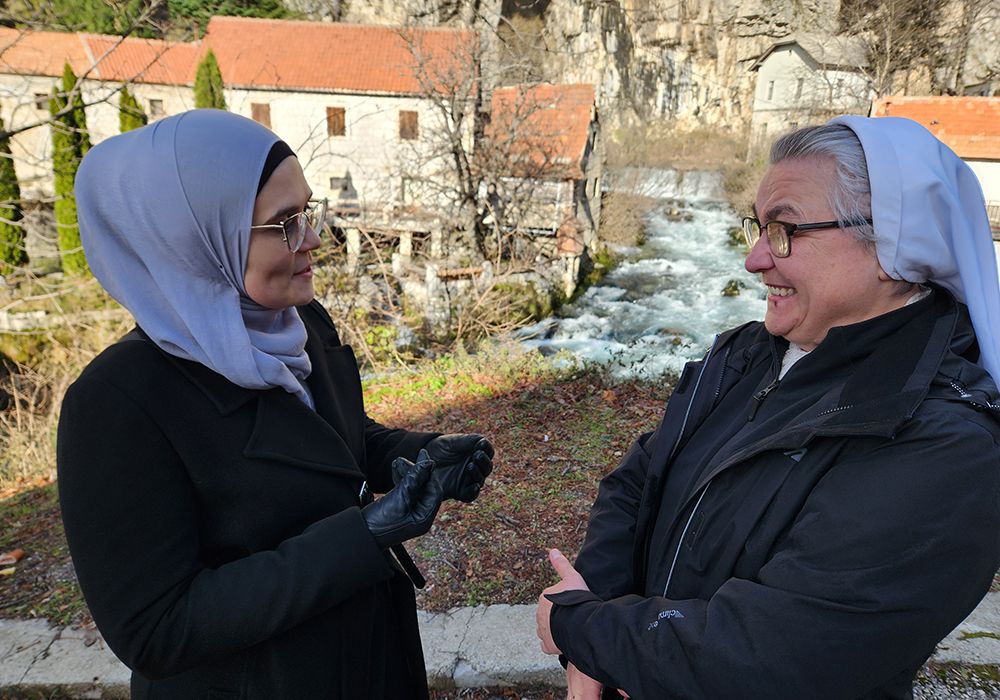
| Sr. Blanka Jeličić, left, a Croatian-Slavonian music teacher and member of the Sisters of Mercy of St. Vincent de Paul, with her Muslim friend and colleague in interfaith cooperation, Šejla Mujić Kevrić, in the city of Livno, Bosnia and Herzegovina. |
In the heart of Jajce, Bosnia and Herzegovina, the Esme Sultanija Mosque stands tall, its towering minaret and stately white exterior symbolizing more than just architectural beauty. It's a sacred testament to healing, resilience, and hope. The original structure, ravaged during the Bosnian war in 1992, underwent a meticulous reconstruction, completing its restoration journey only last year.
Imam Ramiz Kahrić, leading a group of Christian visitors through the mosque, lamented the destruction of sacred objects during times of war. The Esme Sultanija Mosque, named after the wife of Bosnian Governor Mehmed Pasha Muhsinović, signifies a triumph over adversity, marking a positive milestone in Bosnia's post-war era.
Among those celebrating this shared progress is Sister Iva Klarić, a 51-year-old Croatian teacher of religion and a member of the School Franciscan Sisters of Christ the King. Having resided in Jajce for 15 years, Sister Klarić has dedicated herself to fostering dialogue and cooperation between the city's Christian and Muslim communities, both scarred by the ethnic and religious animosity of the past.
While Sister Klarić's efforts may seem small in scale, they play a vital role in healing wounds in a country where war-induced divisions still linger. Her work exemplifies Pope Francis' vision of interfaith and ecumenical dialogue, emphasizing the significance of everyday conversations and friendships among people of different faiths.
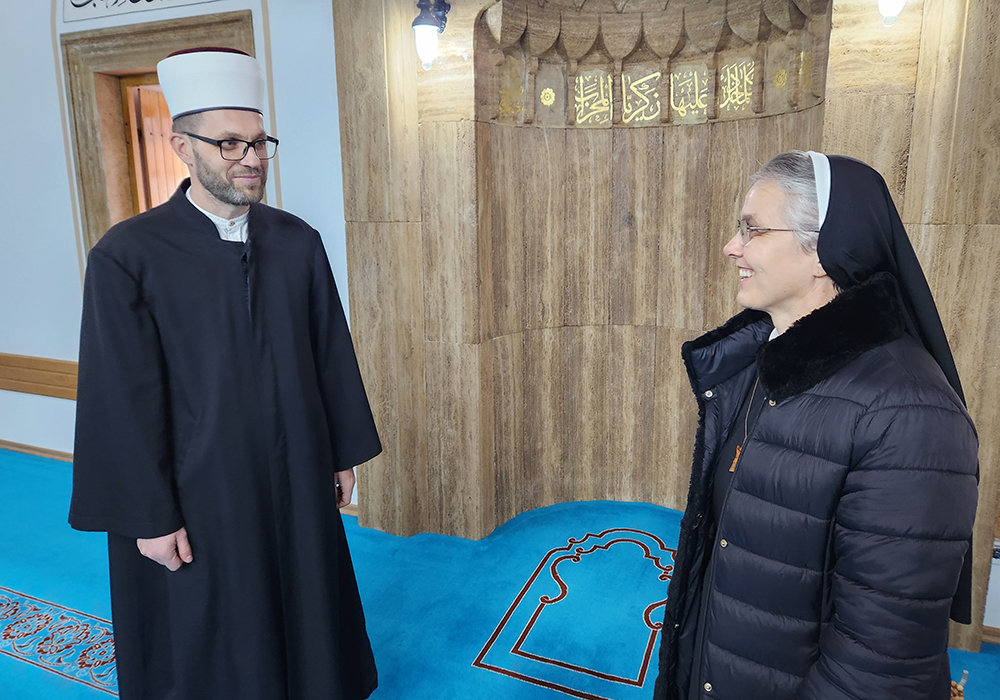 |
| Ramiz Kahrić, the imam of the Esme Sultanija Mosque, left, and Sr. Iva Klarić, 51, a Croatian teacher of religion and a member of the School Franciscan Sisters of Christ the King, Bosnian-Croatian Province, who has resided in Jajce, Bosnia and Herzegovina, for 15 years. |
The Bosnian war of the 1990s drastically altered the city's demographics, reshaping its inner city and fostering new alliances. Sister Klarić, acknowledging the city's complicated history, emphasizes the importance of coming together after such tumultuous times. Building bridges, whether through visits to places of worship or engaging in community and social events, remains crucial.
"We are living this dialogue here," Sister Klarić affirms.
Her congregational house, adjacent to a Catholic church, serves as an open space for all religions and nationalities. It hosts gatherings, social events, poetry readings, prayer meetings, and sessions of the local council for interreligious dialogue, where Sister Klarić serves as the president. These activities respond to the expressed need for inclusive meetings in the community.
Integral to Sister Klarić's ministry is the discussion and promotion of Pope Francis' 2015 environmental encyclical, "Laudato Si', on Care for Our Common Home." Climate-related education, a natural extension of her Franciscan charism, is seamlessly woven into her work. As she asserts, "It's everyone's task" to be climate-conscious, and Sister Klarić actively engages in presentations on the pope's encyclical, even reaching out to school children.
Yet, it's her fervor for interfaith cooperation that defines Sister Klarić's sense of purpose. Inspired by her Catholic upbringing and the mixed religious community in Jajce, she believes that dialogue with neighbors is a Christian mandate. Her journey mirrors the spirit of St. Francis of Assisi, who engaged in peacemaking with the sultan of Egypt during the Crusades in 1219.
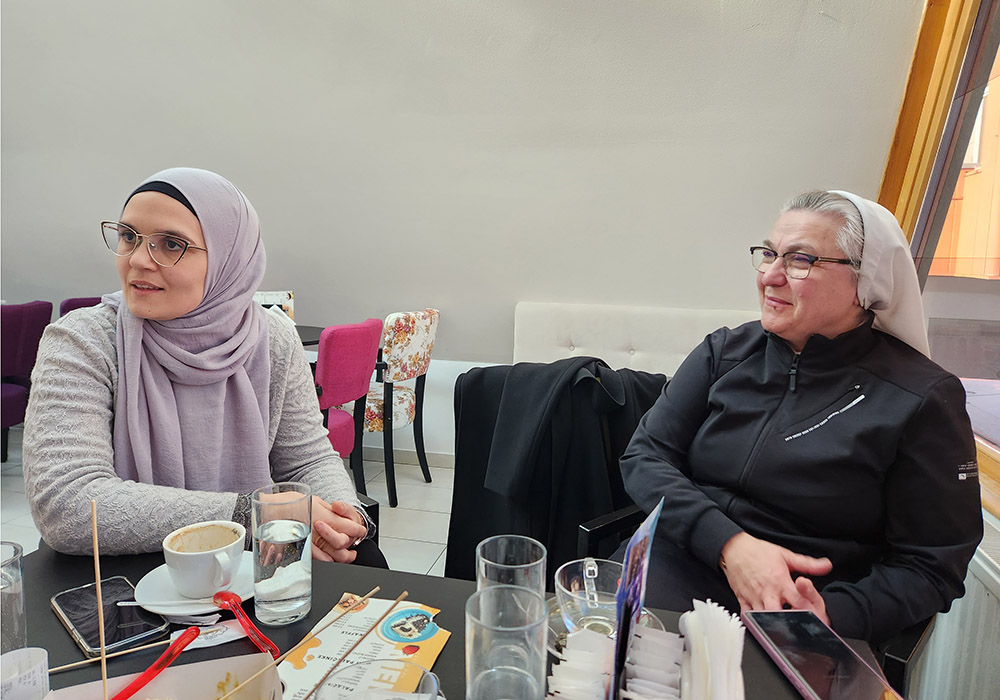 |
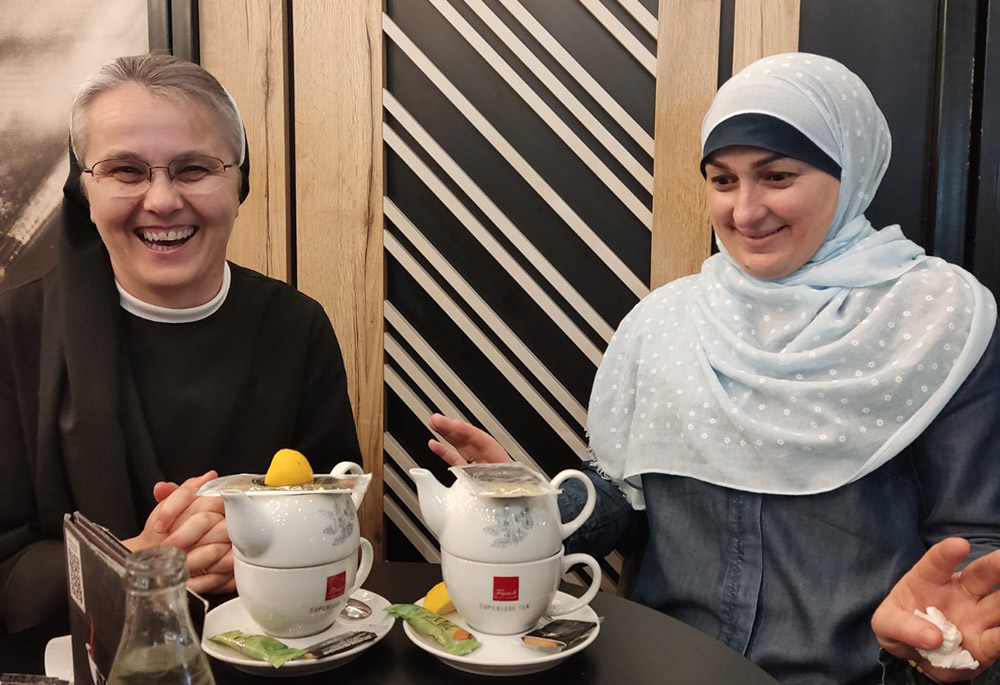
| Sr. Blanka Jeličić, 55, right, a Croatian-Slavonian music teacher and member of the Sisters of Mercy of St. Vincent de Paul, with her friend and colleague in interfaith cooperation, Šejla Mujić Kevrić, during an interview in a café in the city of Livno, Bosnia and Herzegovina |
Sister Blanka Jeličić, another Catholic sister, shares a similar commitment to interfaith dialogue. A member of the Sisters of Mercy of St. Vincent de Paul, Sister Jeličić's ministry during the 1994-95 siege of Sarajevo was marked by a shared sense of suffering and solidarity across ethnic and religious lines. Now teaching church music for Catholic youths and families in Livno, she remains devoted to fostering interfaith cooperation.
Sister Jeličić, having experienced the realities of war, emphasizes the naturalness of seeing God's creation in every person, irrespective of their faith. She actively contributes to an informal city interfaith council in Livno, comprising 27 members from diverse religious backgrounds. The council not only promotes dialogue but initiates joint projects, addressing issues like violence against women and children.
In the city of Livno, where Sister Jeličić ministers, the interfaith group utilizes social media and television coverage to publicize its small-scale yet impactful initiatives. The collaborative work, such as creating food packages for the needy, has gained recognition, including an award from a civic group in Mostar, Bosnia and Herzegovina's fourth-largest city.
Despite the progress, both sisters acknowledge that not all divisions have healed, and tensions persist, occasionally exploited for political purposes. Yet, they remain steadfast in their commitment to breaking those tensions and fostering a society of understanding and cooperation.
 |
| Sr. Iva Klarić, left, a Croatian teacher of religion and a member of the School Franciscan Sisters of Christ the King, Bosnian-Croatian Province, who has resided in Jajce for 15 years and Muslim elementary teacher Almina Sulejmanović, from the city of Fojnica, during a "peace gathering" of Catholic and Muslim students in Sarajevo, the capital of Bosnia and Herzegovina. |
Their efforts align with Georgetown University's John Borelli's observation that everyday conversations among people of different faiths are the bedrock for interfaith dialogue. Sister Klarić praises her Muslim friends and neighbors for their neighborliness, solidarity, and hospitality. The mutual respect and cultural understanding that exist among the diverse population of Jajce contribute to the city's unique fabric.
Being a Catholic Franciscan sister in this context is not challenging, as Muslims in Jajce appreciate the ministries and friendship of the Catholic sisters. During a visit to the mosque, the imam proudly mentioned Mary's veneration in the Quran, signaling a level of trust between the communities. Sister Klarić emphasizes the need to be open to differences, echoing the teachings of St. Francis and encouraging everyone to appreciate the beauty of God's diverse creation.
In closing, Sister Klarić reminds everyone, "Don't be afraid of the other. Look at how God created us, all different. It shows how large his creation is. That's a beautiful thing." In the ongoing journey towards reconciliation, these Catholic sisters stand as beacons of hope, proving that genuine dialogue, respect, and understanding can triumph over the shadows of war.


