
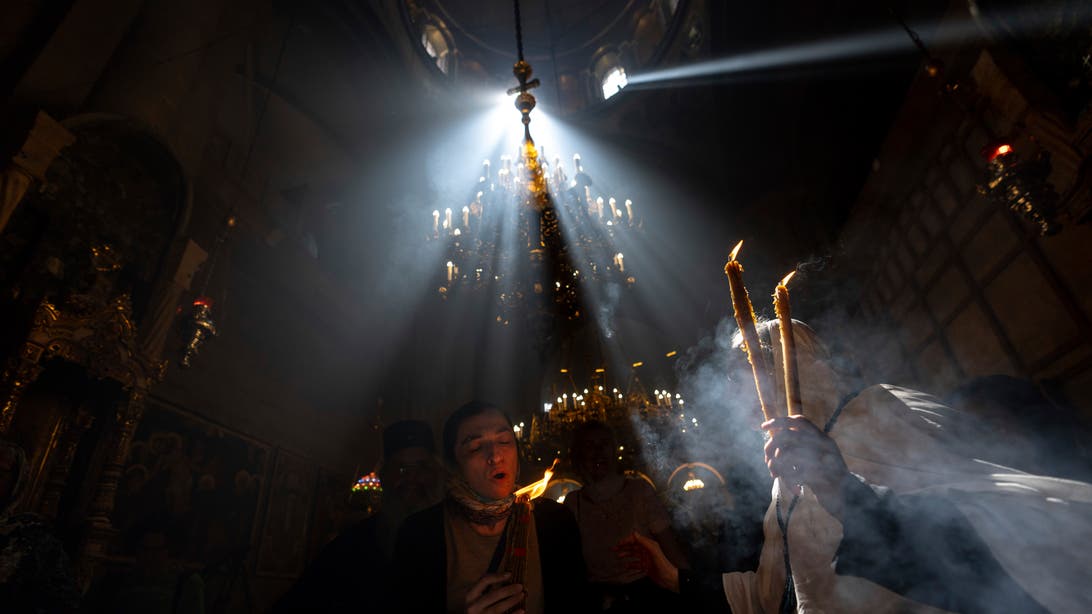
In the heart of Jerusalem, amidst the labyrinthine alleys of the Old City, the Church of the Holy Sepulcher stands as a beacon of spiritual significance for Christian Orthodox worshipers. Each year, on the eve of Orthodox Easter, the faithful congregate in a tumultuous yet awe-inspiring display of devotion known as the "Holy Fire" ceremony.
Bathed in the glow of flickering candles and enveloped in clouds of incense, the atmosphere within the sacred confines of the church is charged with anticipation and reverence. Bells toll, voices raise in prayer, and the air crackles with the energy of ancient tradition revived once more.
The focal point of the ceremony lies within the hallowed chamber believed to enshrine the tomb of Jesus Christ. Through a narrow opening, hands reach in to retrieve the sacred flame said to emanate miraculously from within the sepulcher. As the first candle is ignited, a ripple of exultation spreads through the gathered throng, igniting a cascade of flames that dance in the darkness.
For Angela Manoug, a first-time attendee, the experience is nothing short of transformative. "I am speechless, I don’t even know how to explain it," she shares, her eyes alight with wonder. "It is my first time that I have seen the holy light, and I am very blessed by God to have seen it."
The origins of the Holy Fire ceremony trace back over a millennium, steeped in the annals of Christian Orthodox tradition. The Church of the Holy Sepulcher, revered as the site of Jesus' crucifixion, burial, and resurrection, serves as the sacred stage for this timeless ritual. Yet, despite its profound spiritual significance, the event is not without its logistical challenges.
The sheer volume of worshipers vying for a glimpse of the divine light often exceeds the capacity of the church, leading to tensions with Israeli authorities and occasional stampedes. However, amidst the jubilant chaos of this year's gathering, a sense of solemn reflection pervades, offering a poignant juxtaposition to the nearby conflicts that besiege the region.
In the words of Issa Assasieh, his hands alight with flames, "This year is very sad, but I wish with the light of the holy fire from Jerusalem will give peace all around the world, thank you and happy Easter, Jesus is risen."
Against the backdrop of geopolitical tensions and historical disputes, the Holy Fire ceremony stands as a testament to the enduring power of faith and the timeless allure of Jerusalem as a spiritual epicenter. As flames flicker and voices unite in prayer, the ancient traditions of Orthodox Christianity continue to illuminate the path of believers, transcending the boundaries of time and conflict.


