
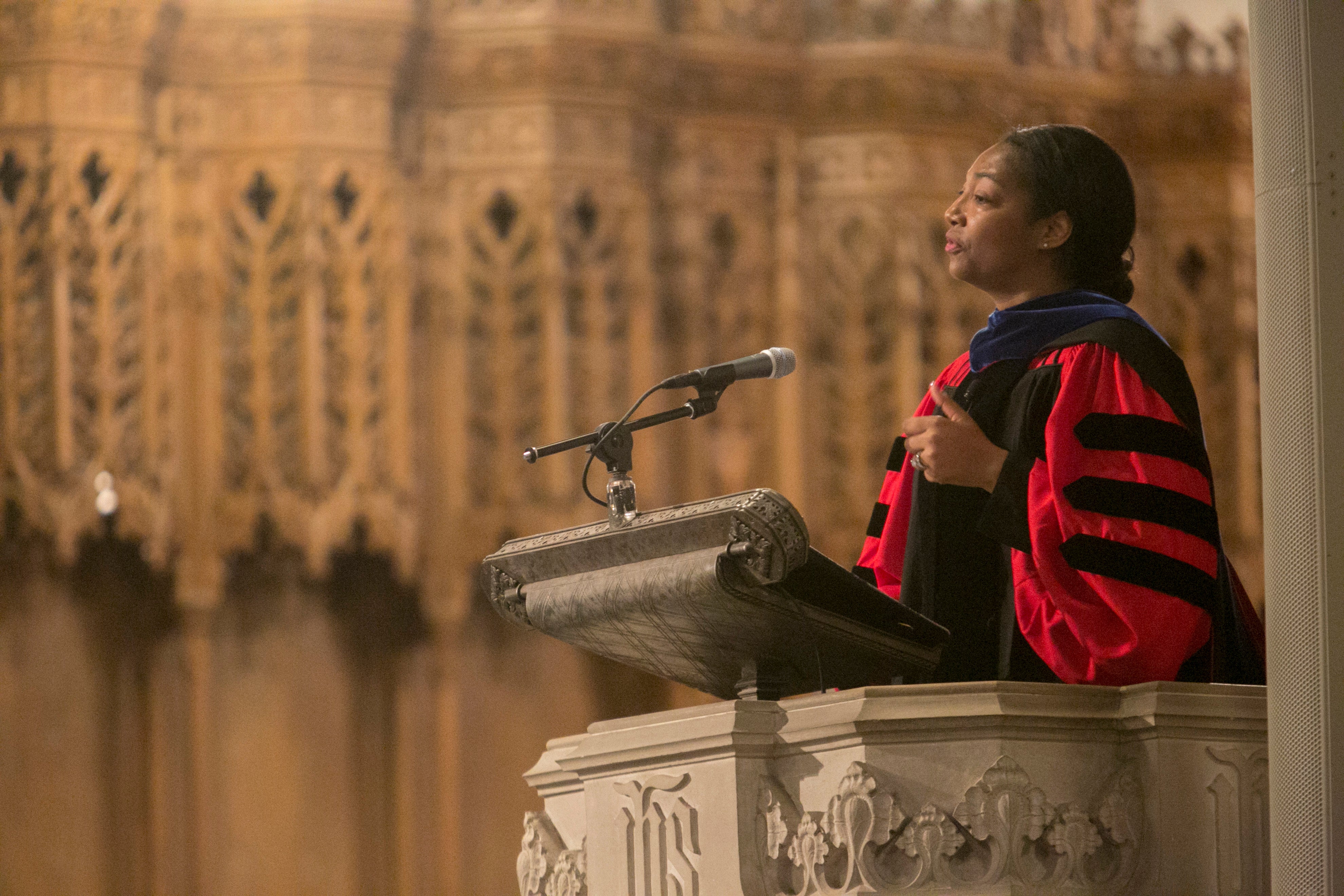
In the heart of Harlem, the Abyssinian Baptist Church, a venerable institution with a 215-year history, is facing a federal gender discrimination lawsuit that challenges its decision-making process in selecting a new senior pastor. Eboni Marshall Turman, a Yale Divinity School professor and an ordained pastor at Abyssinian, filed the lawsuit after being overlooked for the coveted position.
Historically, Abyssinian has been a symbol of the Black church's strength and resilience in America, gaining prominence under the leadership of influential figures like the Rev. Adam Clayton Powell, Jr. With a rich legacy that extends back to its founding, the church has been a spiritual home for countless believers, including Marshall Turman.
Marshall Turman, who became the youngest pastor ordained in Abyssinian's history in 2007, harbored aspirations of becoming the church's first female senior pastor. However, when the position became available following the death of longtime senior pastor Calvin O. Butts III in 2022, Marshall Turman's optimism was met with disappointment as she was not even considered a finalist.
Believing that gender discrimination played a pivotal role in her exclusion, Marshall Turman took legal action against Abyssinian and its search committee, specifically naming committee chair Valerie S. Grant in the lawsuit. The complaint alleges that gender discrimination was openly discussed during committee meetings, with one member expressing a reluctance to hire a woman as the senior pastor.
The lawsuit, filed on December 29, seeks unspecified monetary damages for lost wages, benefits, and other economic damages, along with an injunction against gender discrimination in hiring-related processes.
Abyssinian, through spokesperson LaToya Evans, refuted the discrimination accusations, stating that Marshall Turman fell short of key requirements for the role, and other finalists prevailed based on merit. Grant, also a board member of Morehouse College, denied inappropriate behavior and defended the rigorous and fair nature of the selection process.
The broader context of the Black church presents challenges for women aspiring to pastoral leadership, with varying beliefs on women's authority over men. Marshall Turman, whose research focuses on gender politics in Black churches, finds herself at the intersection of her academic work and real-life experiences.
The lawsuit sheds light on the complexities of the pastoral selection process, with Marshall Turman alleging that the decision-making was tainted by secrecy and gender bias. Despite being held in high esteem by her mentor, Calvin Butts, and being considered the obvious choice by some committee members, Marshall Turman contends that the process systematically eliminated female applicants.
While Abyssinian contends that the process was fair and unbiased, the lawsuit emphasizes the enduring struggle faced by women in the church, addressing theological erasure and violence against Black women.
As Abyssinian navigates this legal challenge, it raises questions about the broader role of women in Black churches and the ongoing dialogue within the community about gender equality and leadership.


