
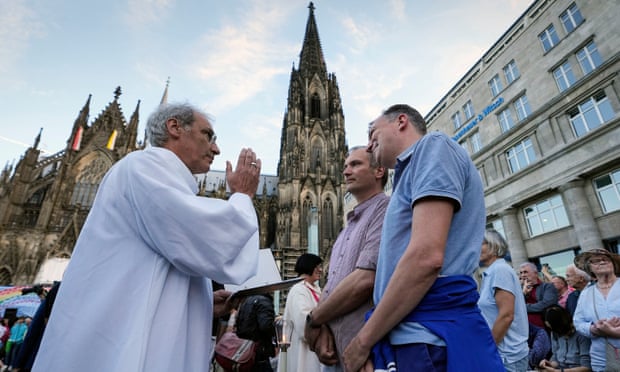
In a recent move that stirred mixed reactions within the Catholic community, Pope Francis approved a ruling last month allowing priests to bless unmarried and same-sex couples. While this decision was welcomed by LGBTQ+ Catholics, it faced opposition from some bishops, particularly in African countries, where implementation is met with reluctance.
The Vatican has emphatically asserted that permitting priests to bless same-sex couples does not signify an endorsement of homosexuality. However, it also clarified that this measure is not to be deemed heretical or contrary to the longstanding traditions of the Catholic Church. This delicate balancing act seeks to navigate the complex intersection of doctrine, compassion, and evolving societal norms.
The ruling underscores the Pope's emphasis on performing such blessings without any ritualization, ensuring they don't convey church approval of the relationship. It reflects a nuanced approach, attempting to uphold traditional teachings while acknowledging the diverse realities faced by individuals and couples within the LGBTQ+ community.
While the LGBTQ+ community and their allies celebrated this step towards inclusivity, opposition arose from certain bishops, particularly in Africa, who expressed reservations about implementing the ruling. In response, the Vatican restated its position, emphasizing that these blessings should not be seen as justifications for all actions or endorsements of the lifestyles of same-sex couples.
The Vatican's stance was clarified in a five-page statement, reiterating that these blessings are not to be considered heretical or blasphemous. However, it also acknowledged the potential imprudence of such gestures in countries where being homosexual could lead to severe consequences, such as torture, imprisonment, or even death.
The statement provided guidelines for priests, emphasizing that blessings should be brief and not serve as justifications for morally unacceptable actions. It outlined specific contexts in which such gestures could take place, such as during a group pilgrimage where two divorced individuals, now a couple, seek a blessing. The Vatican stressed the importance of maintaining simplicity, ensuring that the blessings last no more than 10 or 15 seconds.
Additionally, the Vatican emphasized that when a same-sex couple seeks a blessing, it should never coincide with civil union ceremonies or be performed with elements resembling a wedding. This meticulous detailing aims to differentiate between the sacrament of marriage and the pastoral blessings offered to same-sex couples.
When the ruling was initially announced in December, it was hailed by some as a notable pastoral shift in the Church's stance toward gay couples, marking a significant moment in its 2,000-year history. This development followed a letter from Pope Francis to two conservative cardinals in October, where he indicated that such blessings could be offered in specific circumstances, provided they were not confused with the sacrament of marriage.
In essence, the Vatican's recent ruling on same-sex blessings reflects a delicate attempt to reconcile traditional doctrine with evolving societal perspectives. It underscores Pope Francis's acknowledgment of the diverse challenges faced by LGBTQ+ individuals while maintaining a careful balance to avoid perceptions of an outright endorsement. As the Catholic Church navigates this nuanced terrain, the impact of this decision on the global Catholic community remains to be seen.


