
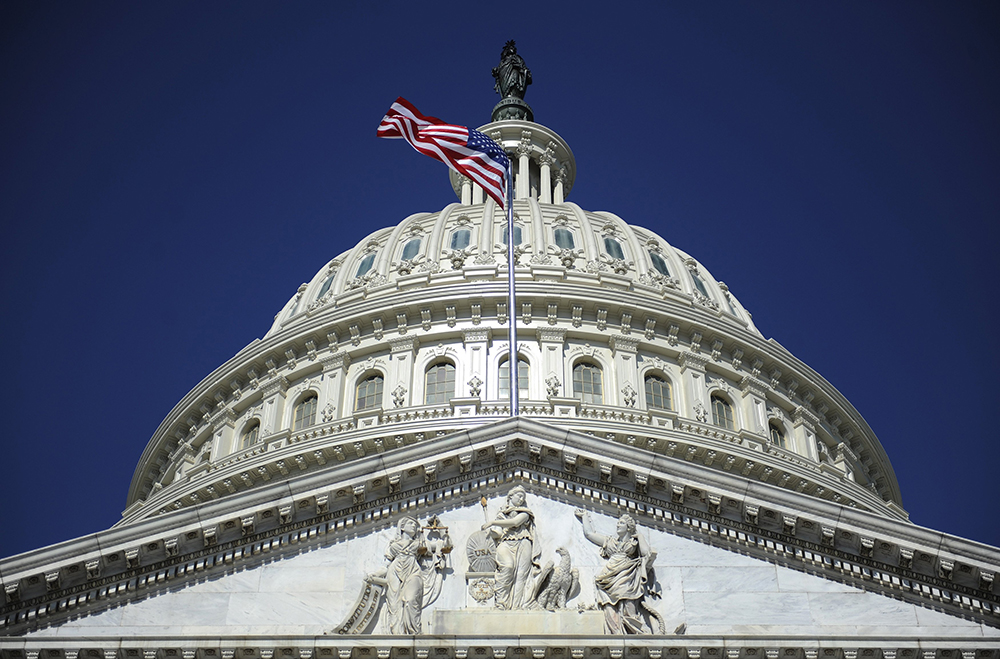
In a surprising turn of events, a Traditional Latin Mass, utilizing the 1962 Roman Missal, took place at the U.S. Capitol on January 23, causing a stir as the Washington Archdiocese revealed that the event was not authorized. The Mass, organized by the Arlington Latin Mass Society, commemorated the first anniversary of a leaked FBI memo suggesting potential threats from "radical traditionalist" Catholics. This unauthorized event has raised questions about the adherence to protocols and permissions outlined by Pope Francis in his apostolic letter, "Traditionis Custodes," which addressed the celebration of the Latin Mass.
The Pillar first reported on this unauthorized Latin Mass, indicating that it was potentially the inaugural instance of such a Mass being held on Capitol grounds. Although records show Catholic priests officiating in the U.S. House as early as 1826, the specific details of the liturgy or prayer involved in those instances were not immediately clear.
Upon inquiry about the event, a spokesperson for the Archdiocese of Washington conveyed to OSV News that permission had not been sought to hold a Traditional Latin Mass outside the three designated churches authorized by Washington's archbishop, Cardinal Wilton Gregory. These locations include one within the District of Columbia – the Franciscan Monastery of the Holy Land in America – and two in suburban Maryland: the Chapel at St. John the Evangelist Parish in Forest Glen and the Mission of St. Dominic in Aquasco.
Pope Francis' apostolic letter, "Traditionis Custodes," issued in July 2021, marked a significant shift in permissions granted by his predecessor, Pope Benedict XVI, in 2007. The letter rolled back widespread allowances for diocesan priests to celebrate Masses with the 1962 Roman Missal, expressing concerns that the older form was being misused to undermine the unity of the church, including challenging the authority of the Second Vatican Council.
Msgr. Charles Pope, the archdiocese's coordinator for the extraordinary form of the Latin Mass, explained the customary process for those seeking exceptions to the limitations on the older missal within the archdiocese. Interested parties typically reach out to the chancery or directly to him to initiate the request for permission.
Pope emphasized that whether it is a Traditional Latin Mass or a Novus Ordo Mass in English, it is standard practice for those intending to hold Masses in the Capitol complex to contact the local pastors, St. Peter's and St. Joseph's on Capitol Hill, respectively. This ensures a courteous and communicative approach, reflecting the respect for established protocols.
The Pillar's report did not disclose the identity of the priest who celebrated the unauthorized Mass. Msgr. Pope expressed his concern, stating that it is unusual for a priest to agree to conduct a Mass that might generate controversy without first consulting the local ordinary.
In response to the lack of authorization, one of the organizers defended the decision to be discreet, citing concerns that Cardinal Gregory might intervene and cancel the event if informed. Msgr. Pope acknowledged the frustration some traditional Catholics feel about the restrictions imposed by "Traditionis Custodes" but emphasized the importance of following protocols.
Ed Condon, co-editor of The Pillar and a trained canon lawyer, described the Capitol Mass as "transgressive and canonically illicit." While covering the event strictly as a journalist, he did not actively participate in the liturgy or receive Communion.
Msgr. Pope reinforced the significance of obedience within the church, emphasizing that legitimate authority requests legitimate actions from God's people. He acknowledged the challenges of navigating frustration with directives but stressed the importance of following protocols to maintain order within the Church.
In conclusion, the unauthorized Latin Mass at the U.S. Capitol has ignited a conversation about adherence to established protocols and permissions within the Catholic Church, particularly in the wake of Pope Francis' directives outlined in "Traditionis Custodes."


