
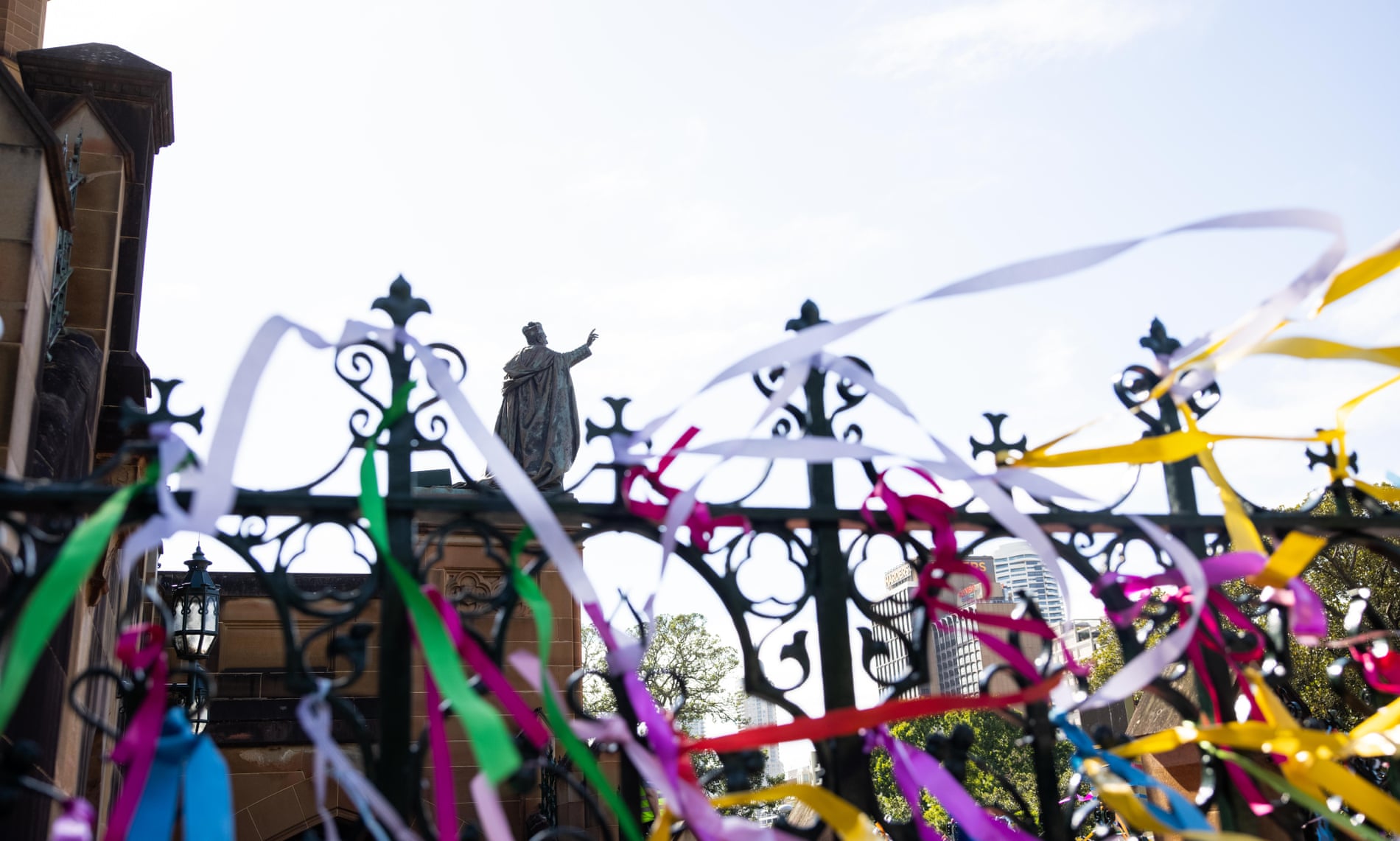
The Catholic church and other institutions used the passage of time to block survivors from having their cases heard by arguing a fair trial was no longer possible. Photo credit: The Guardian
A proposal to introduce legislation in the New South Wales (NSW) parliament aims to curb the use of legal maneuvers by churches and other institutions to impede justice for survivors of child abuse. The bill, spearheaded by Legalise Cannabis Party upper house MLC Jeremy Buckingham, seeks to enshrine recent high court findings into statutory law.
The issue stems from the widespread practice of using stay applications to permanently halt civil cases brought by abuse survivors, particularly in instances where perpetrators have passed away. These applications, employed by entities like the Catholic church, exploit the passage of time to argue against the feasibility of a fair trial, effectively blocking survivors from having their cases heard.
Despite evidence presented before the royal commission indicating significant delays in survivor disclosures—on average 22 years—alongside instances of institutions obstructing justice by concealing abuse and destroying records, such tactics have persisted. However, a landmark ruling by the high court in November dealt a significant blow to this strategy, emphasizing that stays should only be granted in rare and exceptional circumstances to prevent undermining the administration of justice.
Buckingham's proposed bill seeks to translate these high court findings into concrete legislative measures. It aims to restrict defendants' ability to seek permanent stays based solely on the passage of time and proposes provisions to allow survivors who faced stays since 2016 to have their cases reconsidered.
Speaking about the bill, Buckingham underscored the importance of ensuring justice for victims of child sexual assault and eliminating what he referred to as "lawfare" tactics employed by institutions. He highlighted around a dozen cases that have been permanently halted due to stays since 2016, emphasizing the urgent need for legal reform in this area.
The legislation has garnered support from survivors like Matt Barker, who described it as "enormously beneficial" for those still pursuing justice through the courts. Barker's own case against Scouts NSW was stayed last year, despite his abuser being alive, convicted of criminal offenses against him, and willing to provide evidence. He emphasized that the bill not only assists current cases but also offers recourse for those whose cases were closed due to stays or the threat thereof, preventing them from accepting inadequate settlements.
While the government has previously signaled support for amending the law in line with the high court's findings, tangible action has yet to materialize. Buckingham's motion in November urging consideration of legislative changes received governmental support, but the introduction of the bill signifies a proactive step toward effecting change. However, as of now, the government has not reviewed the bill's contents or taken definitive action.
In summary, the proposed legislation represents a crucial endeavor to address systemic barriers to justice for survivors of child abuse in NSW, aiming to prevent the misuse of legal tactics that have long hindered their access to the civil court system.


