
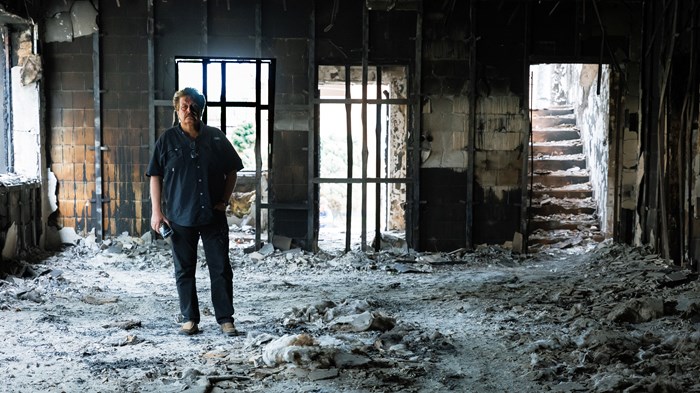
In the ongoing conflict between Russia and Ukraine, religious freedom has become a casualty, with churches caught in the crossfire. The International Religious Freedom Summit held in Washington, DC, provided a platform for a Ukrainian delegation to shed light on the plight of faith communities facing persecution in war-torn regions. Led by Sergey Rakhuba, president of Mission Eurasia, the delegation presented a report titled "Faith Under Fire," detailing the destruction of 630 religious sites by Russian forces.
According to Rakhuba, faith communities in occupied territories are under immense pressure, with Russia aiming to monopolize religion. However, while Ukraine condemns Russia's actions, concerns have been raised about Ukraine's treatment of its own Orthodox Church. Legislation passed by the Ukrainian parliament in October has sparked controversy, with accusations that it could lead to the banning of the historic Ukrainian Orthodox Church (UOC), which is linked to the Russian Orthodox Church (ROC) patriarchate in Moscow.
International lawyer Robert Amsterdam cautioned that Ukraine's attempts to control the UOC could have serious consequences, raising questions about the country's commitment to human rights and the rule of law. He sent a dossier to Western leaders, highlighting potential violations by Ukraine and warning of the impact on its relations with the European Union.
The situation has drawn attention from the United Nations, with concerns raised about violence instigated by the Orthodox Church of Ukraine (OCU) against the Moscow-linked UOC. The OCU, granted autocephaly by Ecumenical Patriarch Bartholomew I of Constantinople in 2019, enjoys support from the United States but faces opposition from the ROC, which maintains jurisdiction over the UOC.
Rakhuba highlighted Russia's efforts to control religious narratives, citing the concept of Russki Mir, or "Russian World," as a tool to marginalize other Christian denominations. He outlined three phases of Russia's approach in occupied territories, including coercion, threats, and the seizure of churches.
The Mission Eurasia report documented widespread violations, including canceled registrations, surveillance, and the kidnapping of religious leaders. It also noted instances of forced allegiance to the ROC and harassment of those refusing to comply. Despite the conflict, the UOC has faced criticism for its perceived allegiance to Moscow, with calls for greater independence from Russian influence.
The UOC's stance has strained relations within Ukraine's religious community, with divisions over its ties to Moscow and allegations of collaboration with Russian authorities. While some Ukrainian Orthodox have expressed support for the OCU, others remain loyal to the ROC, leading to tensions and uncertainty about the future of the church.
As the conflict continues, Ukrainian churches are united in condemning Russian aggression and advocating for religious freedom. Rakhuba emphasized the need to resist Russian interference and protect the rights of believers in Ukraine.
Despite challenges and divisions, Ukrainian Christians remain steadfast in their faith and commitment to defending religious liberty. The ongoing conflict underscores the importance of international support and solidarity in safeguarding fundamental freedoms in Ukraine.


